The question of economical, humanitarian and technical aid after nuclear disaster
Introduction.
Nowadays nuclear industry is a great part of all of the world processes. Nuclear manufactures produce energy- which is consumed by millions of people. The useful impact of that sphere is really huge, the another question is what to do, If the system goes wrong, if any kind of disaster can take place nearby the city you live- it means total radiation infection and dead of thousands of people. So, one of the aims of the ECOSOC committee in Spimun 2012 is to create a clear plan of actions in that case. And that means - economical, humanitarian and technical aid after nuclear disasters.
A nuclear and radiation accident is defined by the International Atomic Energy Agency as "an event that has led to significant consequences to people, the environment or the facility. Examples include lethal effects to individuals, large radioactivity release to the environment, or reactor core melt.
History:
This question has been discussed since the first nuclear reactors have been constructed. It has also been a key factor in public concern about nuclear facilities. Some technical measures to reduce the risk of accidents or to minimize the amount of radioactivity released to the environment have been adopted. But despite this, today we have got terrible samples of ineffective measures after nuclear disasters. Here are the most dangerous nuclear accidents ever.
Japan
The earthquake that shook on March 11, 2011, stirred up a devastating tsunami that blasted coastal cities with walls of water, shifted the Earth’s axis and has been blamed for thousands of deaths. It also triggered what many are calling the worst disaster of its kind since the incident at Chernobyl, a virtual byword for the risks that come with harnessing nuclear energy. As experts scramble to stem the mounting crisis in Japan, we take a look at four of the most devastating nuclear accidents to date
Chernobyl (April 26, 1986)
Built in the late 1970s about 65 miles north of Kiev in the Ukraine, the Chernobyl plant was one of the largest and oldest nuclear power plants in the world. The explosion and subsequent meltdown that occurred there in April 1986 would claim thousands of lives cause countless birth defects and unleash a thyroid cancer epidemic on the region. However, it would take years for the full story behind the catastrophe to emerge. A bungled experiment at one of the facility’s four reactors created a sudden power surge, which in turn led to a series of blasts that blew the 1,000-ton steel top off of the reactor. A lethal cloud of radioactive material gathered over the nearby town of Pripyat—which was not evacuated until 36 hours after the explosion—before wafting over large parts of Europe. Soviet officials tried to keep the disaster under wraps, but on April 28 Swedish radiation monitoring stations located more than 800 miles from Chernobyl reported radiation levels 40 percent higher than normal.
In the opening days of the crisis, 32 people died at Chernobyl and dozens more suffered radiation burns. The radiation that escaped into the atmosphere–equivalent to several times that produced by the atomic bombs dropped on Hiroshima and Nagasaki–contaminated millions of acres of forest and farmland. The full human toll from the calamity is still being tallied, but experts believe that thousands of people died and as many as 70,000 suffered severe poisoning. In addition, a large area of land may not be livable for as much as 150 years, including the 18-mile radius around Chernobyl–home to some 150,000 people who had to be permanently relocated. In 2000, the last working reactors at Chernobyl were shut down and the plant was officially closed.
Kyshtym (September 29, 1957)
In the years following World War II, the Soviet Union constructed dozens of covert facilities—many of them hastily and shoddily built—in an effort to strengthen their nuclear arsenal. One of these, the Mayak nuclear fuel processing plant in the Russian town of Ozyorsk, became the site of a major disaster when the cooling system in a waste storage tank failed, causing the dried radioactive material it contained to overheat and explode. A plume of deadly particles swelled above Ozyorsk and the surrounding region, eventually spanning some 300 square miles. A full week passed before the affected zone’s 10,000 residents were evacuated; because the plant was shrouded in secrecy, they received no explanation for their abrupt and permanent resettlement. By that time, reports had surfaced of mysterious ailments, including people’s skin sloughing off from exposed body parts.
Instead of acknowledging what had happened in the disaster’s aftermath, the Soviet government created the East-Ural Nature Reserve in the contaminated area and prohibited unauthorized access to it. In 1979, the Russian biologist and dissident Zhores Medvedev made waves by exposing the accident’s lasting effects, but it was not until 1990 that reports documenting the event were declassified. According to estimates, 200 people died of cancer because of exposure to radiation, and thousands more may have suffered from related illnesses. The Mayak incident has come to be associated with the nearby town of Kyshtym because Ozyorsk did not appear on any official maps at the time.
Three Mile Island (March 28, 1979)
The most serious nuclear accident in U.S. history took place at the Three Mile Island plant near Harrisburg, Pennsylvania, a brand-new facility lauded for its state-of-the-art design, efficiency and affordability during an era of energy crises. It began when a pressure valve in one of the reactors failed to close, allowing cooling water–contaminated with radiation–to drain into adjoining buildings. Control room operators made critical errors as they struggled to contain the crisis, and by early morning the core had heated to over 4,000 degrees–just 1,000 degrees short of meltdown. As radioactive steam began pouring out of the plant, word of the incident leaked to the outside world. The plant’s parent company downplayed the event, claiming that no radiation had been detected off plant grounds, but within days radiation levels were elevated over a four-county zone. Pennsylvania Governor Richard Thornburgh ordered the evacuation of pregnant women and small children from the area.
On March 31, plant workers were able to address the problems and ended the threat of a meltdown. Although no deaths or injuries were reported, there has been an ongoing controversy over whether the radiation released at Three Mile Island led to increased cancer and infant mortality rates in the region. The incident also eroded the American public’s faith in nuclear power, inspiring many demonstrations, and increased awareness of the need for emergency preparedness at the state and local levels.
Windscale (October 10, 1957)
Designed to produce plutonium and other materials for the country’s burgeoning nuclear weapons program, Britain’s first nuclear reactor, known as Windscale, was built in northwest England in the late 1940s. On October 10, 1957, workers conducting standard maintenance at the massive facility noticed rising temperatures. Upon further inspection, they discovered that the reactor’s uranium-filled graphite core had caught fire. Worse, it had likely been ablaze for two days, releasing dangerous contaminants into the atmosphere. With the reactor on the verge of collapse, plant operators risked their lives to fight the flames with cooling fans, carbon dioxide and water. The fire finally died out on October 12, but by that time a radioactive cloud was already spreading across the United Kingdom and Europe.
While no evacuations occurred, officials prohibited the sale of milk from the affected area for roughly a month. Scientists estimate that, over the long term, radioactive fallout from the Windscale fire may have caused some 240 cases of cancer. An inquiry that began within days of the accident concluded that the blaze had been both avoidable and mishandled. The complete report was suppressed for several decades, however, in part because it may have compromised Britain’s efforts to cooperate with the United States on nuclear weapons development.
Organizations:
IAEA- International Atomic Energy Agency.
The IAEA is the world's center of cooperation in the nuclear field. It was set up as the world?s "Atoms for Peace" organization in 1957 within the United Nations family. The Agency works with its Member States and multiple partners worldwide to promote safe, secure and peaceful nuclear technologies. (Learn more about the IAEA in this video).
Organizational Profile
The IAEA Secretariat is headquartered at the Vienna International Centre in Vienna, Austria. Operational liaison and regional offices are located in Geneva, Switzerland; New York, USA; Toronto, Canada; and Tokyo, Japan. The IAEA runs or supports research centers and scientific laboratories in Vienna and Seibersdorf, Austria; Monaco; and Trieste, Italy.
The IAEA Secretariat is a team of 2300 multi-disciplinary professional and support staff from more than 100 countries. The Agency is led by Director General Yukiya Amano and six Deputy Directors General who head the major departments.
IAEA programmes and budgets are set through decisions of its policymaking bodies - the 35-member Board of Governors and the General Conference of all Member States. Reports on IAEA activities are submitted periodically or as cases warrant to the UN Security Council and UN General Assembly
IAEA financial resources include the regular budget and voluntary contributions. The annual regular budget is set by the General Conference, as well as extradbudgetary funds and voluntary contributions to the Technical Co-operation Fund. (These figures are published in the latest IAEA Annual Report).
IAEA Mission & Programmes
The IAEA's mission is guided by the interests and needs of Member States, strategic plans and the vision embodied in the IAEA Statute. Three main pillars - or areas of work - underpin the IAEA's mission: Safety and Security; Science and Technology; and Safeguards and Verification.
Relationship with United Nations
As an independent international organization related to the United Nations system, the IAEA?s relationship with the UN is regulated by special agreement. In terms of its Statute, the IAEA reports annually to the UN General Assembly and, when appropriate, to the Security Council regarding non-compliance by States with their safeguards obligations as well as on matters relating to international peace and security.
The European Organization for Nuclear Research (French: Organisation europeenne pour la recherche nucleaire), known as CERN is an international organization whose purpose is to operate the world's largest particle physics laboratory, which is situated in the northwest suburbs of Geneva on the Franco–Swiss border . Established in 1954, the organization has twenty European member states.
The term CERN is also used to refer to the laboratory itself, which employs just under 2400 full-time employees/workers, as well as some 7931 scientists and engineers representing 608 universities and research facilities and 113 nationalities.
CERN's main function is to provide the particle accelerators and other infrastructure needed for high-energy physics research. Numerous experiments have been constructed at CERN by international collaborations to make use of them. It is also the birthplace of the World Wide Web. The main site at Meyrin also has a large computer centre containing very powerful data-processing facilities primarily for experimental data analysis and, because of the need to make them available to researchers elsewhere, has historically been a major wide area networking hub.
The CERN sites, as an international facility, are officially under neither Swiss nor French jurisdiction. Member states' contributions to CERN for the year 2008 totaled CHF 1 billion (approximately ? 664 million).
Documents:
The Convention on Assistance in Case of a Nuclear Accident or Radiological Emergency and the Convention on Early Notification of a Nuclear Accident (Emergency Conventions) are the prime legal instruments that establish an international framework to facilitate the exchange of information and the prompt provision of assistance in the event of a nuclear accident or radiological emergency. They place specific obligations on the Parties and the IAEA, with the aim of minimizing consequences for health, property and the environment. more
Convention on Early Notification of a Nuclear Accident
This Convention aims to strengthen international co-operation in order to provide relevant information about nuclear accidents as early as necessary in order that transboundary radiological consequences can be minimized. States Party commit that, in the event of a nuclear accident that may have transboundary radiological consequences, they will notify countries that may be affected and the IAEA, and provide relevant information on the development of the accident The IAEA in turn forthwith informs States Parties, Member States, other States that may be physically affected and relevant international organizations of a notification received and promptly provides other information on request. Each State Party and the Agency have identified 24-hour warning points to which a notification can be directed, as well ascompetent authorities who are authorized to send notifications and verify information provided. The Agency maintains an up-to-date list of such authorities and warning points and provides it to States Parties, Member States and relevant international organizations. latest status
Convention on Assistance in the Case of a Nuclear Accident or Radiological Emergency
This Convention requires that States Parties cooperate between themselves and with the IAEA to facilitate prompt assistance in the event of a nuclear accident or radiological emergency to minimize its consequences and to protect life, property and the environment from the effects of radioactive releases. The IAEA is charged with using its best endeavours to promote, facilitate and support the cooperation between the States Parties. In the event of a nuclear accident or radiological emergency, the IAEA’s functions are to: make available to a State Party or a Member State requesting assistance appropriate resources for the purpose of conducting an initial assessment of the accident; transmit requests for assistance and relevant information to States Parties that may possess the necessary resources; offer its good offices to the States Parties or Member States; liaise with relevant international organizations to obtain and exchange relevant information; and, on request, co-ordinate the assistance at the international level that becomes available. Each State Party and the Agency have identified 24-hour warning points to which a request for assistance can be directed, as well as Competent Authorities who are authorized to send requests and to arrange for the provision of assistance. The Agency maintains an up-to-date list of such authorities and warning points and provides it to States Parties, Member States and relevant international organizations. latest status
Possible solutions:
In this situation, the delegate should search, which exactly measures have been accepted and to propose something new, in order to develop the aid system. Whether it will be just using a ready plan of some country, or whether it will be a new, fresh and up-to-date plan. Whether it would be cooperation with some international organizations, or whether each country should have its own methods. Whether you delegates will follow the opinion of experienced countries, or whether you will move your own opinion- is your chose, is the chose of all the delegates of the Ecosoc 2012.
Links:
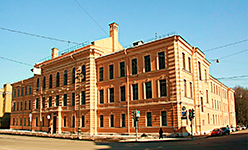 In 2025, Gymnasium
#157 celebrated its 157th birthday. We are
extremely proud of the history of our school and would take a great pride in
sharing it with our Guests.
In 2025, Gymnasium
#157 celebrated its 157th birthday. We are
extremely proud of the history of our school and would take a great pride in
sharing it with our Guests.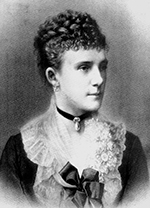 As
a descendant of two royal families, she always did everything as a queen would
do: with confidence and vigor. So, when in 1868 she founded the Gymnasium, she
invested all the efforts to make the place as perfect as she wanted it to be,
taking an active part in everyday life of the Gymnasium and developing school
curriculum in the new subjects, like Hygiene or the First Aid.
As
a descendant of two royal families, she always did everything as a queen would
do: with confidence and vigor. So, when in 1868 she founded the Gymnasium, she
invested all the efforts to make the place as perfect as she wanted it to be,
taking an active part in everyday life of the Gymnasium and developing school
curriculum in the new subjects, like Hygiene or the First Aid. A
special attention was paid to the labor and physical education: diverse
sections were organized within the school to promote the importance of having
sound mind and body. Still, the core of the school remained untouched: more
than a half of the staff and teachers had been working here before the October
of 1917.
A
special attention was paid to the labor and physical education: diverse
sections were organized within the school to promote the importance of having
sound mind and body. Still, the core of the school remained untouched: more
than a half of the staff and teachers had been working here before the October
of 1917.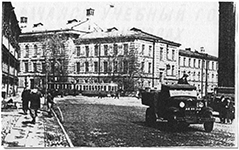 In
spring of 1942 the staff and teachers started to prepare the school for the new
school year. They had to repair all what was shattered by splinters of bombs
and fire. Once a 52-kg bomb hit the roof of the school, but fortunately failed
to explode. A mournful list of 15 surnames of teachers and school staff, who
passed away during the siege days, tells us the grim story of those days.
In
spring of 1942 the staff and teachers started to prepare the school for the new
school year. They had to repair all what was shattered by splinters of bombs
and fire. Once a 52-kg bomb hit the roof of the school, but fortunately failed
to explode. A mournful list of 15 surnames of teachers and school staff, who
passed away during the siege days, tells us the grim story of those days.