
Our History
"Respect for the past - this is the mark that distinguishes civilization from savagery." — Alexander Pushkin
The Cathedral of Enlightenment
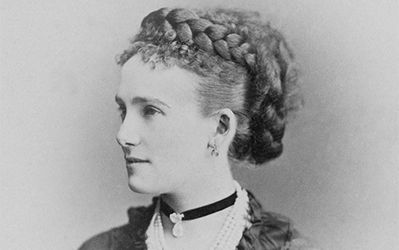
Upon entering the Gymnasium, one will surely meet the portrait of Eugenia of Oldenburg — the founder of the school and the patroness it is named after.
Her family tree dates back to her grandfather, Nicholas I, and her father's stepfather, Napoleon Bonaparte. As a descendant of two royal families, she did everything with confidence and vigor.
When she founded the Gymnasium in 1868, she invested all efforts to make it perfect, developing the curriculum in new subjects like Hygiene and First Aid. In September 1901, the official school year started in the new building, which contemporary magazines named "the Cathedral of Enlightenment".
New Ideas, New Enthusiasm
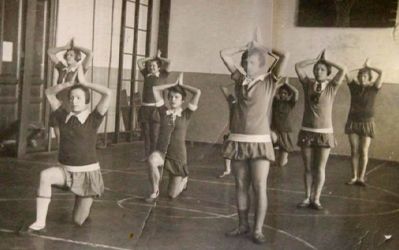
The October Revolution brought change. The former Gymnasium for girls was transformed into a united labor school for boys and girls from working-class families.
Special attention was paid to labor and physical education, promoting the importance of a sound mind and body. Still, the core of the school remained untouched: more than half of the staff had been working here before October 1917.
In the pre-war time, much attention was given to patriotism. Consequently, the majority of high-school students joined the army voluntarily to defend the Motherland in World War II.
Hardship and Heroism
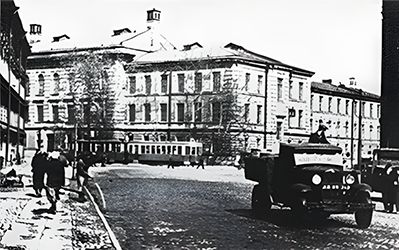
The Siege of Leningrad. Students were evacuated, and the 8th Artillery School was located in the building, patrolling the Smolny district.
Many sacrificed their lives. A heroic exploit was performed by Yury Gapeev: surrounded by enemies, he took the last grenade and blew himself up. In February 1942, cadets were evacuated as famine and frost struck.
In the spring of 1942, staff started to repair what was shattered by bombs. Once, a 52-kg bomb hit the school's roof but fortunately failed to explode. A mournful list of 15 teachers who passed away tells the grim story of those days.
Commitment & Openness
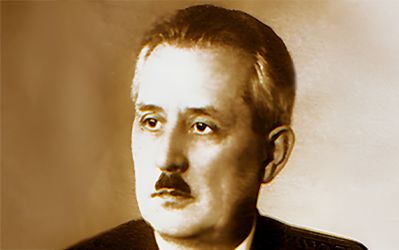
Time, optimism, and enthusiasm heal all wounds. Anatoly Isaev, ruling the school for 21 years, modernized the curriculum and paid special heed to learning English since 1963.
This sound command of English enabled students to found the Club of International Friendship. They kept in touch with students across the globe via letters.
After Perestroika, international relationships enlivened. In 1990, the first group of students visited Palmyra, Pennsylvania, sparking exchange programs with Genoa, Minsk, and Oldenburg.
The Birth of SPIMUN
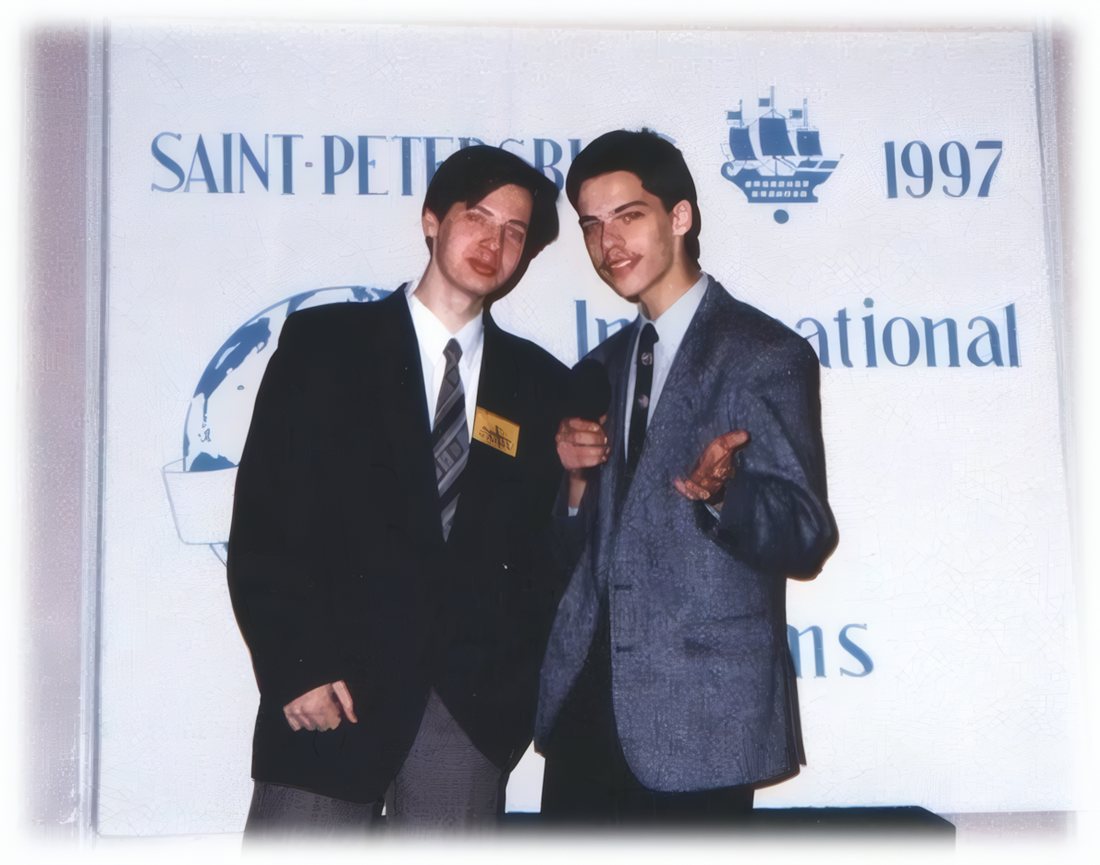
Building on its legacy of international friendship, the first Saint Petersburg International Model UN was held in March 1997, on the initiative of Dmitry Polivyanny and Natalia Rychkova.
SPIMUN started as a small 3-day simulation of ECOSOC with 75 delegates from Athens, Geneva, The Hague, Zurich, Ivanovo, and St. Petersburg.
In 1999, the school regained its historical name: the Gymnasium named after Princess Eugenia of Oldenburg. That same year, active SPIMUN participants were honored to meet UN Secretary-General Kofi Annan.
A Global Legacy
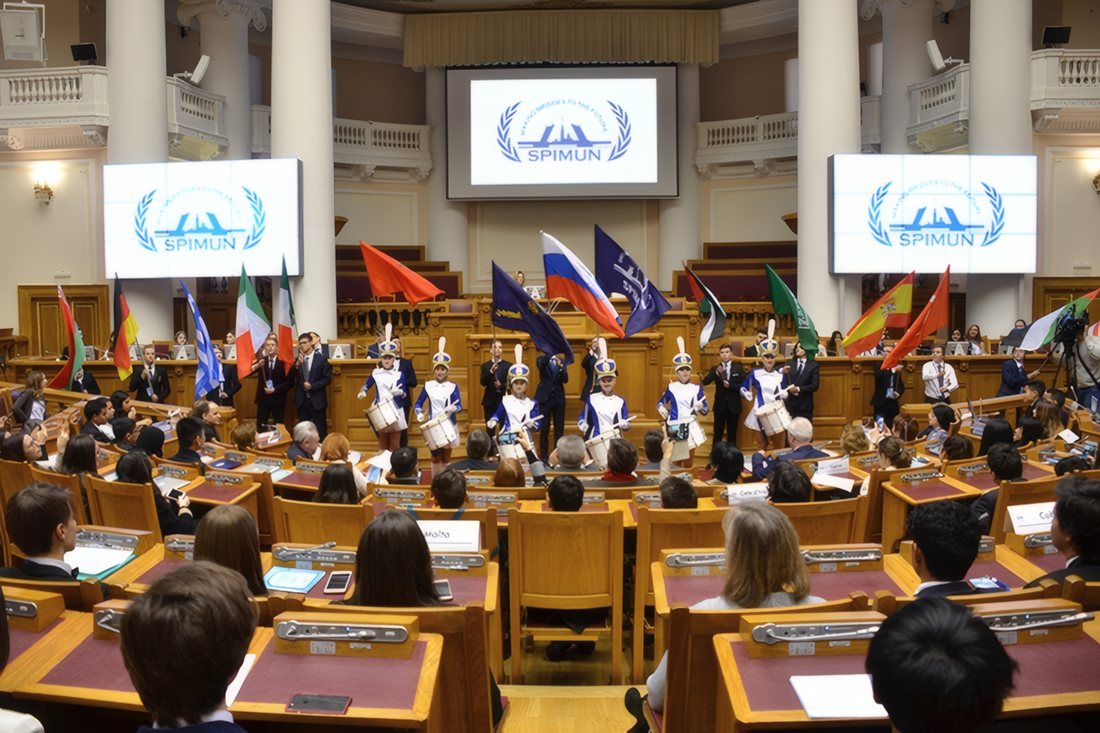
Over the past three decades, SPIMUN has transformed into a large international event — opening ceremonies have even been held at the historic Tauride Palace.
Schools from dozens of countries — from the USA and UK to Singapore, South Africa, and the UAE — have participated in our conferences.
Our alumni include prominent figures: Alexander Malich (director of the Alexandrinsky Theatre), Tamara Yakovleva (Ministry of Foreign Affairs), and PhD academics. Today, as the Gymnasium celebrates its 157th birthday, we continue teaching young delegates to develop true international cooperation.